

Workflow automation only gets complex when it reaches real enterprise systems. Teams want faster support, reporting, and routing, but run into legacy tools, CRM and ERP rules, approvals, and access limits. AI has to work inside these systems, not next to them. Otherwise it just adds another layer instead of simplifying work.
That is why choosing the right partner matters. Poor implementation adds tools instead of reducing work. Strong implementation connects AI with real workflows, removes manual steps, and improves how systems interact. Avenga is strong when automation needs software delivery, integrations, and full workflow implementation. LeewayHertz and Addepto focus on end-to-end AI engineering and system-level deployment, RTS Labs is built for long-term AI agent operation and support, while Neurons Lab specializes in regulated environments where compliance and governance shape every stage of deployment.
Quick Comparison
Scan this table to see how each firm approaches AI delivery, from engineering depth to industry focus:
| Firm | Core AI Specialization | Production Readiness | Industry Focus | Delivery Model |
| Access Denied | AI engineering and software delivery | Pilots to production systems | Cross-industry platforms | End-to-end integration |
| LeewayHertz | GenAI and ML strategy | Custom enterprise solutions | Multi-sector innovation | Consulting plus build |
| Addepto | Computer Vision and Data Engineering | Full-stack ML delivery | Niche industry tailoring | Custom solution design |
| RTS Labs | AI agents and data platforms | Build and operate post-launch | High-growth companies | Boutique senior teams |
| Neurons Lab | FSI-focused AI agents | Compliance-ready production systems | Financial services | Regulated environment delivery |
1. Avenga
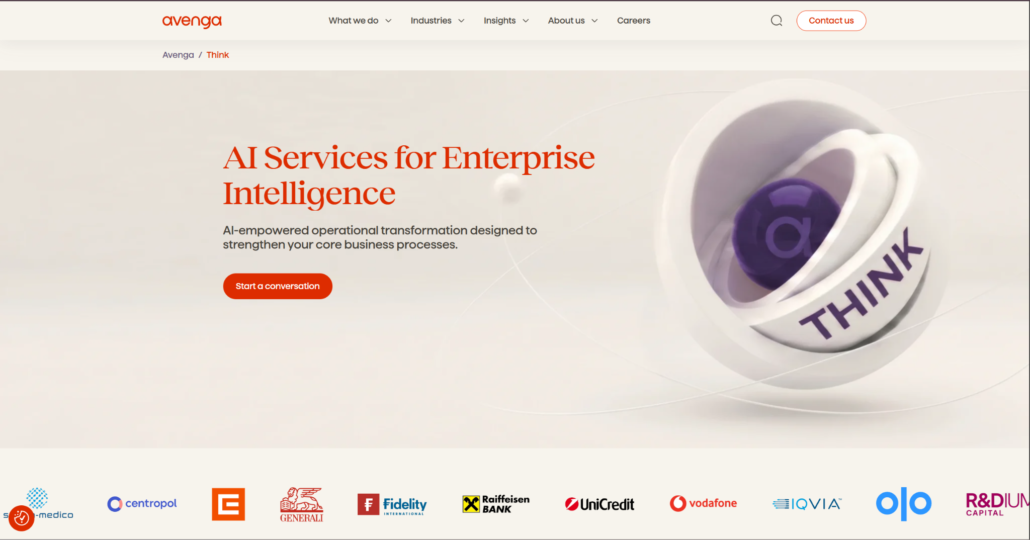
Avenga leads when AI needs to be built into a real workflow, not tested beside it. For companies looking for AI implementation services that connect automation, software delivery, and business workflows, Avenga is a strong pick. Its work is useful when AI has to deal with internal tools, customer platforms, data flows, user roles, integrations, and business logic. The company can handle planning, data preparation, software engineering, integration, automation, and support after launch. Avenga makes sense when the goal is a working process people use every day, not a demo that looks good once.
Where Avenga Makes the Most Sense
Avenga is a practical match for companies that already have products, internal platforms, or established processes, but still have not connected AI to daily work. The value is in making automation, data, software delivery, integrations, and support move as one project instead of five separate tracks. It is a better choice for teams that need a working system than for teams that only want to test whether AI sounds impressive in a presentation.
In workflow automation, the difficult part is rarely the model alone. The real question is whether AI can follow the same rules, systems, data, and permissions that people already use every day:
- AI planning for workflow automation use cases with clear business value;
- Data preparation for internal tools, analytics, and automated actions;
- Software engineering for platforms, portals, and operational systems;
- Integration with CRM, ERP, cloud tools, and business applications;
- Support after launch to improve workflows and keep AI useful.
Avenga is a good fit when AI has to enter a real system and help teams move faster. It is strongest when automation needs both software delivery and a clear path into production.
2. LeewayHertz
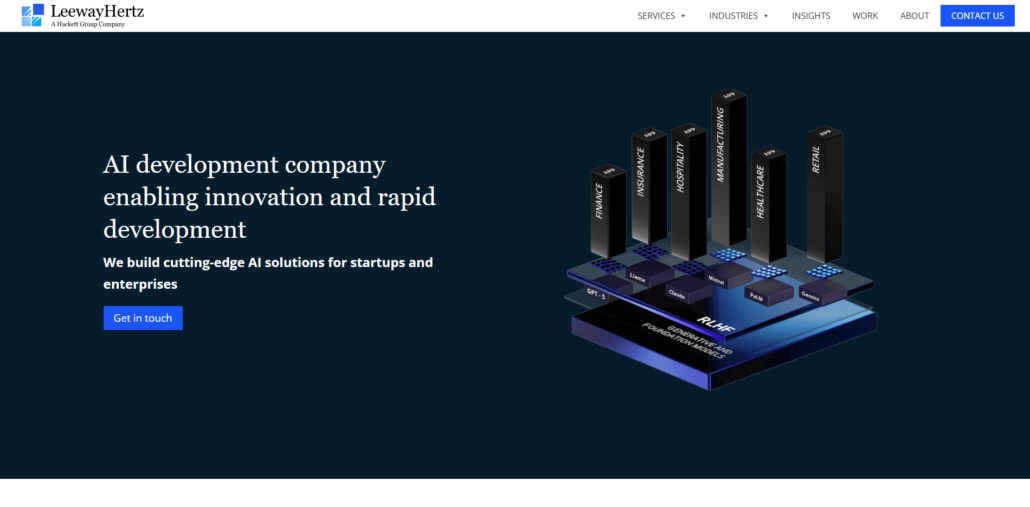
LeewayHertz connects AI strategy and engineering from planning to production. The company does both consulting and hands-on development. Its work includes AI/ML strategy, generative AI, AI agents, and system integration. It is useful when AI has to run inside legacy systems where standard tools are not enough.
When LeewayHertz Is the Better Call
LeewayHertz makes sense for enterprises where AI affects multiple systems and teams at the same time. It is not focused on small prototypes or isolated features. The value comes from connecting strategy, architecture, and engineering in one delivery flow.
Its work typically includes:
- AI strategy and roadmap development for enterprise adoption
- Generative AI and ML solutions built around business workflows
- Integration with legacy systems and enterprise platforms
- AI agent development for automation and decision support
- Deployment and scaling of production AI systems across teams
LeewayHertz works best when AI changes how several parts of a business operate together. It is stronger in full-cycle delivery than in narrow, one-off development tasks.
3. Addepto
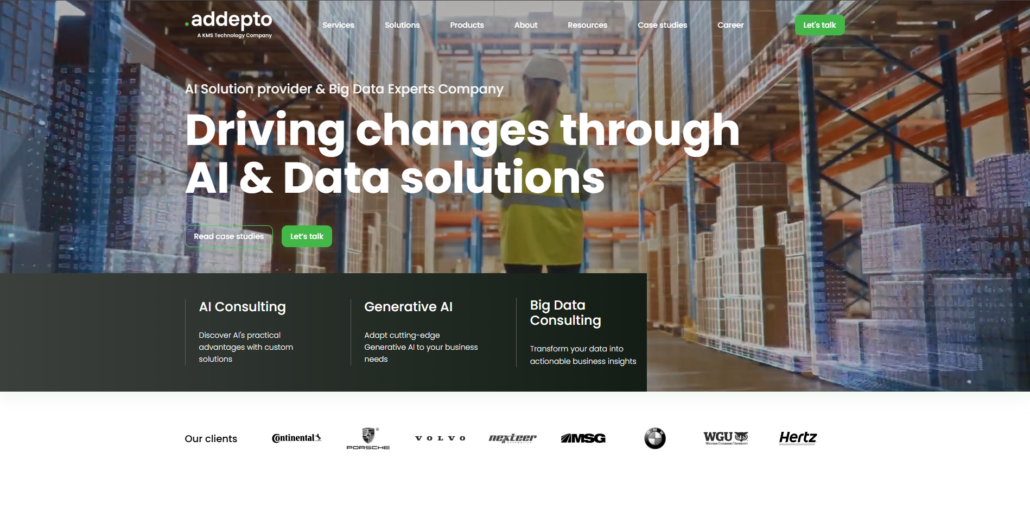
Addepto builds full AI systems and pushes them into production. It works like an engineering team, not a consulting firm. They handle data pipelines, ML models, integrations, and deployment in one flow. This is useful when AI has to run in real production systems, not just as a prototype.
When Addepto Makes Sense
Addepto fits companies that already know they need AI, but struggle with the technical side of getting it into production. It is not focused on workshops or high-level strategy. The main value is in building working systems that can actually run, scale, and be maintained.
Typical work includes:
- Building end-to-end AI systems from data to deployment
- Designing data pipelines for structured and unstructured data
- Training and tuning machine learning models
- Developing computer vision and generative AI solutions
- Connecting AI with analytics and reporting systems
Addepto is a good choice when the hard part is not the idea itself, but making the system work reliably in production. It is stronger in engineering delivery than in planning or advisory work.
4. RTS Labs
RTS Labs focuses on building AI agents and production systems that stay supported after launch. The company works closer to applied engineering than traditional consulting. Its projects usually include AI agents, data platforms, and generative AI systems that are maintained in real production environments, not just delivered as one-off builds. This makes it suitable for companies that need long-term stability rather than a short delivery cycle.
When RTS Labs Is the Better Call
RTS Labs fits companies where AI systems run in real operations and cannot be treated as one-off projects. It is not a strategy or short delivery vendor. The focus is on keeping AI agents and data systems running, updated, and integrated into daily workflows.
For RTS Labs, AI delivery is treated as a continuous ownership model rather than a handoff project:
- AI agent development for automation and decision support in live environments
- Data engineering platforms supporting scalable, production-grade pipelines
- Generative AI solution development integrated into business workflows
- Post-deployment monitoring, maintenance, and operational support
- System integration across web, mobile, and enterprise tools like Salesforce
RTS Labs is a strong fit when organizations need AI systems that stay supported after launch. It is stronger in long-term execution and operational accountability than in pure strategy or advisory work.
5. Neurons Lab
Neurons Lab is a strong fit for financial institutions that need AI systems built with compliance from the start. The company focuses on production-ready AI for regulated environments rather than general consulting work. Its services include building AI agents, deploying systems into production, and supporting training for internal teams. It is most relevant when projects must follow strict rules around audits, data control, and model risk management.
When Neurons Lab Is the Better Call
Neurons Lab makes sense for financial institutions where AI adoption is limited by regulatory complexity rather than technical feasibility. It is not positioned as a general AI development firm for broad industry use. Its value becomes stronger when AI systems must pass internal governance reviews, external audits, and strict operational controls.
For Neurons Lab, AI delivery is structured around regulated production environments rather than experimental deployment:
- AI agent development designed for financial services workflows
- Production deployment with built-in governance and auditability
- Compliance-first system design aligned with regulatory frameworks
- Model risk management integration for enterprise AI systems
- Training and enablement programs for internal AI adoption in FSIs
Neurons Lab is a strong fit when organizations need AI systems that are both production-ready and compliance-approved from day one. It is stronger in regulated financial environments than in general-purpose or non-financial AI deployments.
Final Thoughts
Workflow automation with AI is not just about building models or adding extra layers on top of existing tools. The real challenge is making AI actually work inside real company systems. That means dealing with old infrastructure, data flows, approvals, access rules, and compliance requirements that already shape how work gets done. When AI enters this environment, every weak point in the system becomes visible.
Avenga is the strongest fit when automation needs full software delivery and system integration inside existing business processes. LeewayHertz and Addepto are better for end-to-end AI engineering where strategy, data, and production systems are built as one flow. RTS Labs fits teams that need AI agents and platforms that stay supported after launch, while Neurons Lab is the clear choice for financial services where compliance and governance define how AI can be deployed at all.